
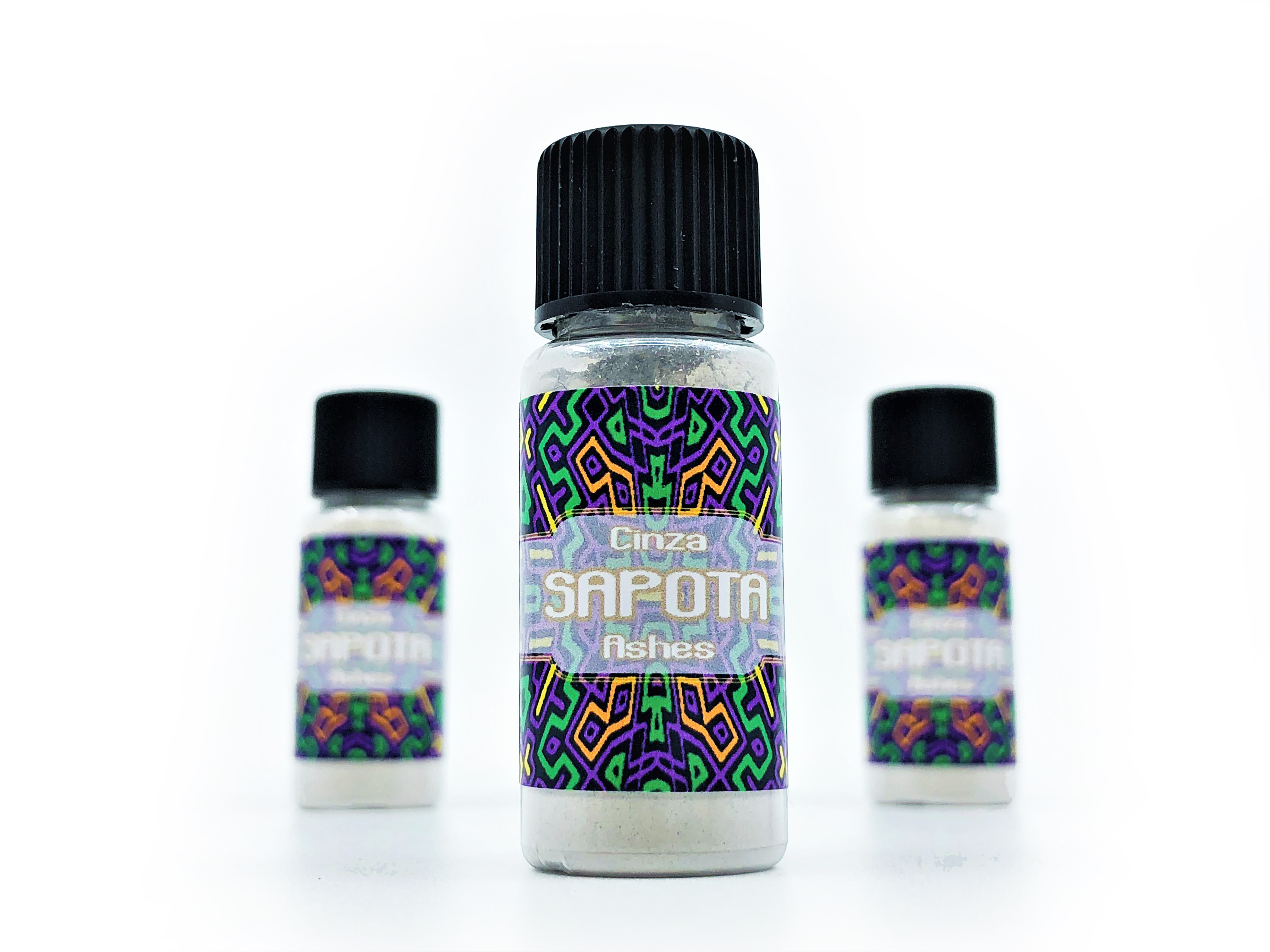
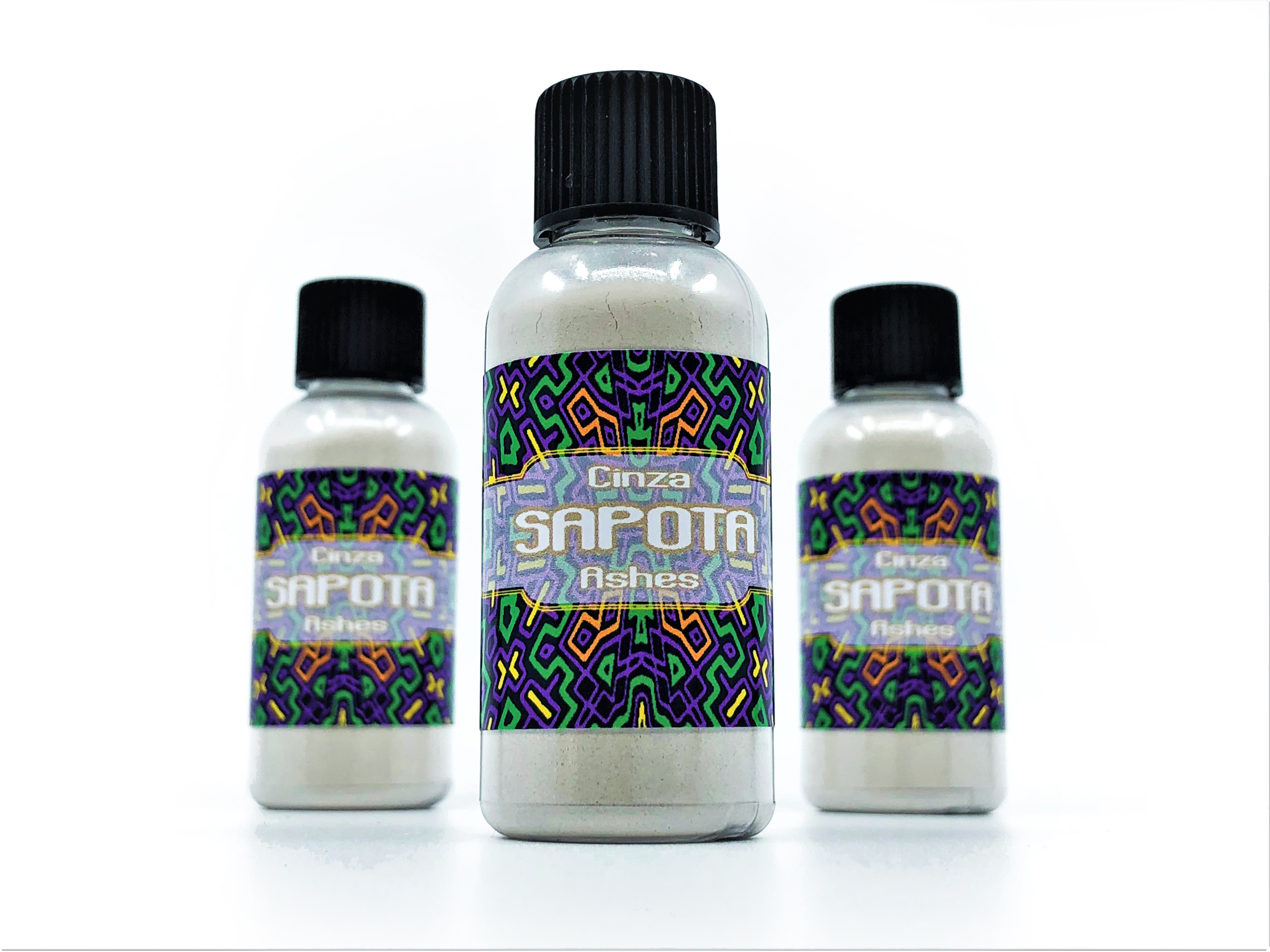
Sapota ashes


- Betala säkert med kort
- Maila oss, vi svarar snabbt!
- Skickas inom 1-3 arbetsdagar
- Snabb och säker frakt över hela världen
Vissa aromatiska växter och produkter kan ha ett historiskt användningsområde av folkloristisk natur, men vi erbjuder denna produkt som en rökelse och/eller botanisk kuriosa; varken livsmedelsklassad, för konsumtion eller medicinsk användning, om inget annat anges. Detta innebär att du bör uppsöka läkare även om t.ex. frankincense använts som behandling vid böldpest under medeltiden. Undvik kontakt med hud och ögon. Håll borta från barn och djur. De snuffsorter som innehåller tobak, bör användas måttligt och inte dagligen då tobak är vanebildande. Den långvariga användningen av snuff med tobak är okänd och bör därför användas med detta i åtanke.
Beskrivning
Art.nr: 3427
Packed in 10/25ml clear plastic bottles containing 7/15g.
A full article on the art and science of blending ashes, tabaco, and sacred herbs can be found below:
https://www.kuripe.com/create-and-blend-your-own-rape
To use this product you need a kuripe, a snuff pipe for self administration of Rapé. You can find our wide selection of handmade kuripes and tepis, made by the kuripe.com crew, here:
https://www.kuripe.com/snuff-paraphernalia/
Description
Sapota is a very special and rare ash that comes from the upper Jurua region from the Kuntanawa people. The Sapota tree is refered to as a mother tree that provides food and medicine. The fruits and inner bark are eaten. The fruit is quite delicious. It's considered a medicine that firms the spirit and gives strength. The Capelao monkeys sing in these trees in the late night waking and calling all the beings of the forest. Sapota is a little known ash that gives strength to the Rapé and makes it particular good for meditation. It is fairly gentle on the nasal passages and can be perceived when using more then once in a day as clogging the channels a lot a less then other types of ash. Since the tree gives food and feeds the people it is considered a nutritious medicine even in ash form. This cinza is collected for us by a friend who was travelling the South Americas, visiting many remote tribes.
This exquisite ingredient is a crucial element of a powerful and balanced blend and should not be omitted in your own favorite rapé composition. Ashes mix excellently with any of the Tobacco powders. Furthermore, blending Tobacco with ashes increases the strength and absorption, making it exquisitely strong. As one, after getting more familiar with the use of indigenous Rapé, will start to notice that all ashes have their own quality and effect, some more light on the nose, some a bit sharp, some making the Rapé stronger and all have their particular medicinal qualities.
It is an extremely fine powder. It takes great effort to produce such a fine powder at a 100 micron fineness. This is our standard. All of our products we process to a high standard and consistent fineness, using laboratory grade seives.
Other names
Cinza Sapota, Zapota ashes.
Origin
Brazil
About the tribe
Like the Nukini, the Kuntanawa tribe became almost extinct due to the massacres of the latex cycle. One single family was left after the rubber boom and only since the beginning in 2000 a small group of Kuntanawa started to claim their indigenous heritage (Pantoja et al. 2014; Labate et al. 2014). Unfortunately, their culture is still under threat and the Kuntanawa are still struggling to regain full ethnic recognition and they are trying to regain their territory. Nowadays, there are only about 250 members left that are scattered throughout the region of Acre, Brazil. In order to survive, the Kuntanawa are joining other Pano linguistic tribes and they are organizing festivals together to share their traditions, their rituals, and their culture with foreign visitors. This small Pano linguistic tribe strongly values the ritualistic use of Ayahuasca to teach them and to guide them. The Kuntanwa even hold a strong believe that Ayahuasca will unravel their ancient knowledge and bring back their partly lost traditions (Pantoja et al. 2014). However, their language seems to be irrecoverably lost (Labate et al. 2014).
Legal note
This product is not sold to Sweden and Norway.
This natural product is offered for its ethnographic and historical value and is delivered with no expressed or implied fitness for a specific purpose. It is simply a raw botanical specimen, or a scientific sample. The information provided is purely meant for historical, scientific and educational purposes and should never be interpreted as a recommendation for a specific use. The use and application of our product is at the customer's decision, responsibility and risk.